

You finish a range session with a bucket empty and a scorecard full of questions. You know you hit a hundred balls, but you still can't tell whether your misses came from contact, start line, distance control, or club choice. That's where a golf ball tracking app earns its keep. The best ones turn raw shots into a pattern you can use, whether you're playing full rounds, grinding at the range, or feeding data into a desktop system like Dialed Golf so the work doesn't disappear when the session ends.
Table of Contents
- 1. Arccos (Arccos Caddie App + sensors and accessories)
- 2. Shot Scope (Shot Scope app + tags/watches)
- 3. V1 Game (GPS shot-tracking + strokes gained)
- 4. Golfshot (Golfshot / Golfshot Pro / Golfshot Champions)
- 5. 18Birdies
- 6. Toptracer Range
- 7. Rapsodo Golf (MLM / MLM2PRO + Rapsodo app)
- 8. FlightScope FS Golf (for Mevo/Mevo+/X3 series)
- 9. Garmin Golf (app for Garmin wearables and Approach R10)
- 10. Dialed Golf
- Top 10 Golf Ball Tracking Apps, Feature Comparison
- Connecting On-Course Play with Range Practice
1. Arccos (Arccos Caddie App + sensors and accessories)
Arccos is a strong choice if you want automatic on-course shot tracking without stopping to log every swing. Its value comes from the full-round picture, because shot tracking has moved beyond simple scorekeeping into systems that build club-by-club averages and trend data, the same direction seen in category tools like GolfStat and Garmin's analytics views. Arccos fits that shift with strokes-gained breakdowns, AI caddie guidance, and strategy prompts that point you toward the areas that deserve work next.
The practical reason golfers keep using it is simple, it cuts friction. You can play a normal round and still leave with usable data, and that matters for players who want honest feedback without changing how they play.
Best fit: golfers who want the fullest on-course analytics loop and are willing to pay for it.
Arccos also fits a larger improvement workflow after the round. A round can show that approach play is costing strokes, then a desktop hub like Dialed Golf's wedge distance matrix tool helps turn that gap into a practice plan instead of another vague note in your phone.
Official site: Arccos Caddie App
2. Shot Scope (Shot Scope app + tags/watches)
A lot of golfers want better numbers, but they do not want a bigger hassle on the course. Shot Scope fits that gap well. It uses hardware-assisted shot tracking with tags and watches, then turns the round into post-play metrics you can review without paying for the same access year after year. For players who want automatic tracking and a lower ongoing cost, that trade-off makes sense.
Why it works for improvement
Shot Scope is strongest when you need repeated, honest feedback. If the same miss keeps showing up, the value comes from collecting enough rounds to separate a one-off bad day from a real pattern. The watch-and-tag setup supports hands-free tracking during play, then gives you a clear review afterward, which is useful for golfers who prefer to stay focused on the round instead of managing entries.
It also fits the way good practice usually works. A round might show that two wedges overlap or that one yardage is missing entirely, and that is the point where the information becomes useful. Use that gap to shape your next session, and if you want a simple reference for those carry windows, compare it with Dialed Golf's carry distance chart before you step onto the range.
Practical rule: if you only check one number after a round, check the yardage window that cost you the most indecision.
Shot Scope works best for golfers who want on-course data first, then practice decisions second. It gives you a dependable round record, and that record can feed a larger improvement loop after the round, whether you are adjusting wedges, refining gapping, or deciding what to work on next.
Official site: Shot Scope best sellers

3. V1 Game (GPS shot-tracking + strokes gained)
A good round can still feel vague if you only remember the misses. V1 Game helps clean that up for golfers who want shot-level tracking, strokes-gained style analysis, and club-by-club breakdowns without building a full tag setup. If Arccos asks you to commit to a broader ecosystem, V1 Game takes a watch-first approach that still delivers serious golf analytics.
That matters because the value starts after the round ends. Fairway hits, greens in regulation, putting, and club averages only become useful when they point to a specific pattern you can act on. V1 Game fits that workflow well, since it turns the round into reviewable data and leaves the coaching layer open for whatever level of detail you want.
Watch-first, without the hardware overhead
V1 Game works well for golfers who travel, play casually, or do not want another set of sensors to manage. The setup is lighter, so the barrier to getting started stays low. The trade-off is worth understanding, though. A watch-first setup is convenient, but it will not feel as hands-free as a dedicated tag system when you want every shot captured with almost no attention.
That makes it a better fit for players who want usable numbers without turning the round into a hardware project. If your practice notes show that a wedge yardage keeps drifting or your iron gaps feel fuzzy, compare those carry windows with Dialed Golf's carry distance chart before your next range session. That is how on-course data becomes a cleaner practice plan instead of just another screen full of stats.
Official site: V1 Game app
4. Golfshot (Golfshot / Golfshot Pro / Golfshot Champions)
Golfshot has the broadest feel of a classic golf GPS app that grew into a serious tracking tool. Its course data scale is part of the story, with real-time distances on over 45,000 courses worldwide according to Golfshot's own site, which is exactly the kind of reach you want if you travel or play a lot of different layouts. That scale matters because shot tracking only becomes useful when the app can follow you across courses, not just on your home track.
The other reason Golfshot stays relevant is its evolution. The category used to stop at score logs, but Golfshot now sits in the world of shot-by-shot records, trend analysis, and more layered round review. The result is a tool that works for the golfer who wants both navigation and performance data without switching apps mid-round.
Where Golfshot fits best
Golfshot is best for players who want an all-around course app with wearable support and the option to go deeper later. It's not the cheapest premium path, and some of the strongest features sit behind higher tiers, but that's the trade if you want a mature ecosystem and broad usability.
Use it if you care about course management as much as tracking. If your issue is usually “what should I hit here?” rather than “what was my launch angle?”, Golfshot belongs near the top of the list.
Official site: Golfshot
5. 18Birdies
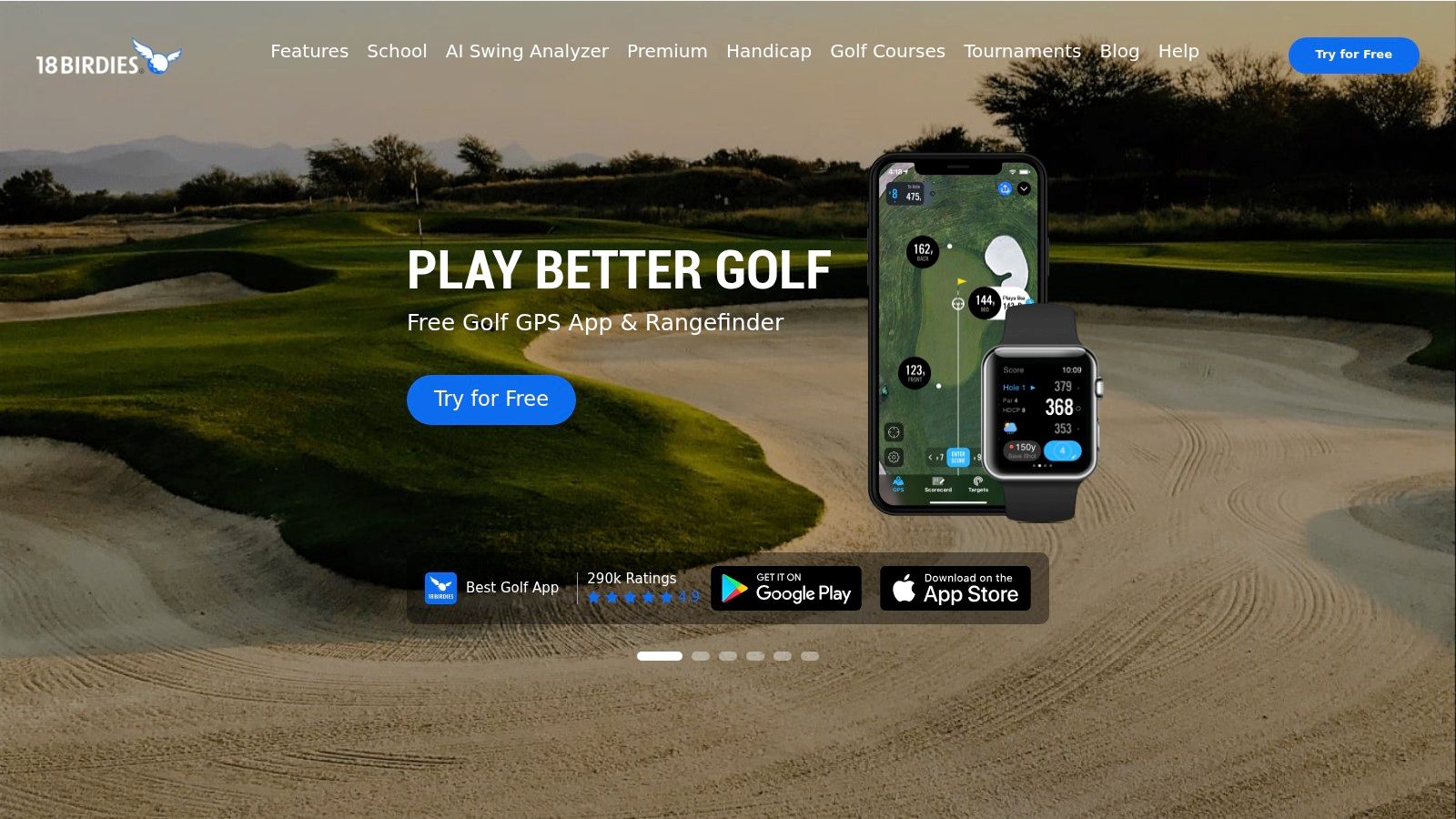
18Birdies is the easiest recommendation for golfers who want a polished GPS and scorekeeping app with social energy. It's not just a scorecard replacement, it's also a round companion with practice content, planning tools, and a broad free tier that lowers the barrier for casual players who still want better data. For many golfers, that combination is enough to make it the app that stays on the phone.
The important distinction is that 18Birdies works well for players who want to stay engaged between rounds. The Golf School content and structured plans make it feel less like a passive tracker and more like a nudge toward improvement. That's useful if you're the kind of golfer who needs a little structure, not another blank notebook.
Good for golfers who want momentum
18Birdies is strongest when you want something that's easy to use and hard to outgrow. The interface is approachable, the GPS experience is reliable, and the upgrade path is clear if you later want more advanced stats. The trade-off is that some of the deeper analysis is gated, so golfers hunting for serious strokes-gained detail may eventually want a more specialized platform.
It's a good middle lane option, especially for players who care about convenience first and analytics second. For a lot of golfers, that's the honest sweet spot.
Official site: 18Birdies
6. Toptracer Range
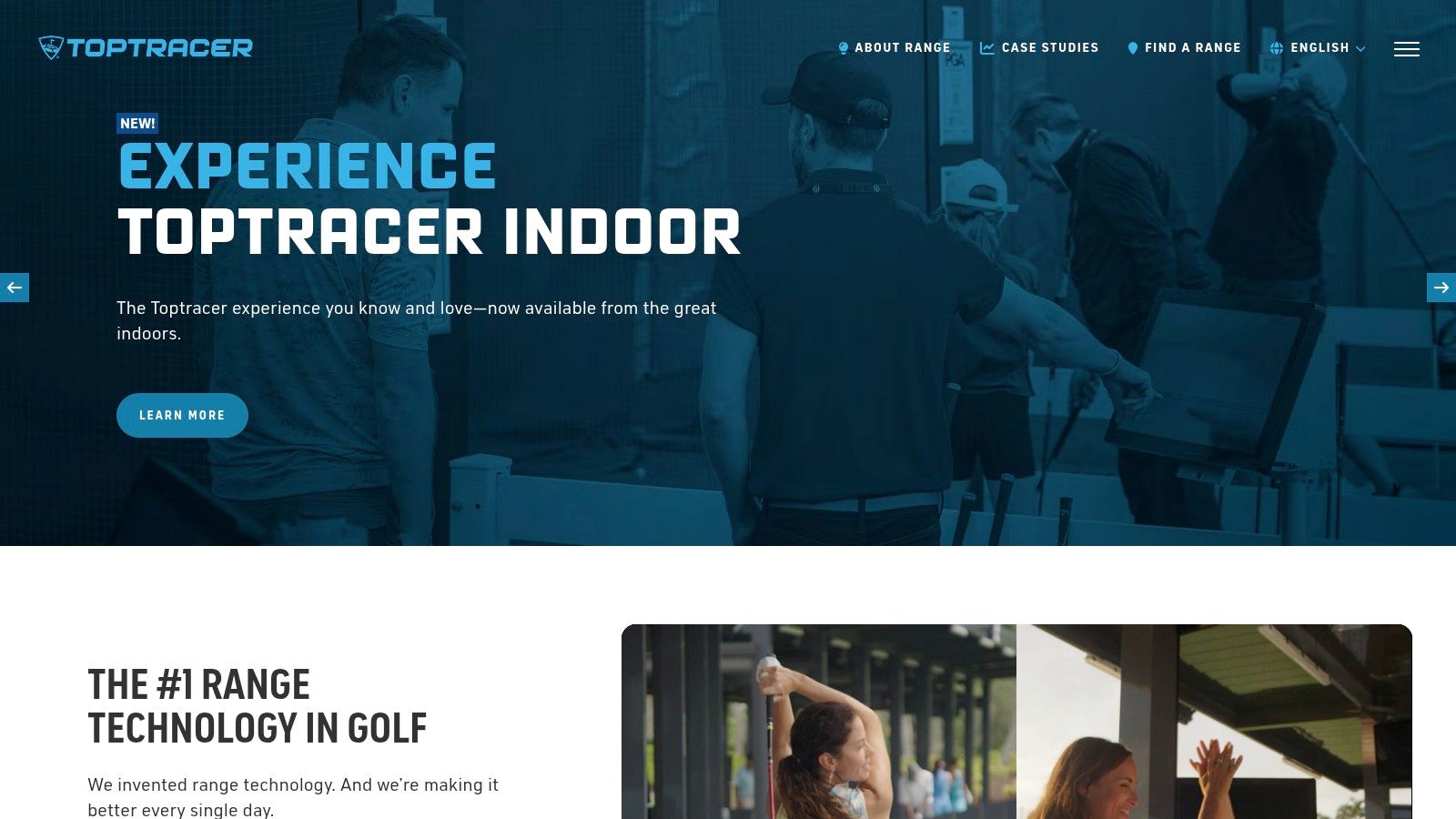
A player who spends most of their time on the range will get more out of Toptracer Range than out of a general-purpose golf app. The system lives inside participating facilities, and Toptracer says it is deployed at more than 450 ranges in 31 countries, which shows how far range-based ball tracking has moved beyond a niche setup. In practice, that means you can see live ball flight, carry feedback, and club history in a range setting without buying your own device.
That matters because range work changes when the feedback is immediate. Instead of leaving a session with a vague sense that a swing tweak helped, you can watch the result shot by shot in a controlled environment. It also makes practice easier to repeat, since the system saves sessions and supports games and leaderboards. For golfers who need structure, that can turn a bucket of balls into a session with a purpose.
Best use case and limitation
Toptracer is strongest when the range is your testing ground. It gives you the kind of feedback that helps you calibrate yardages, compare clubs, and spot ball-flight changes without needing to translate from feel alone. The trade-off is simple. It stays tied to the facility, so it does not follow you onto the course the way an on-course tracking app does.
That is why it fits golfers who want to build a clearer yardage picture before they play. If you use range sessions to confirm carry numbers and see whether a swing change changes flight, Toptracer gives you a clean environment for that work. You can then move those notes into a desktop workflow and compare range results with real round performance later. For players trying to connect practice data with a fuller improvement system, a tool like Dialed Golf's Golf Ball Fitter helps make that handoff more useful.
Official site: Toptracer Range
7. Rapsodo Golf (MLM / MLM2PRO + Rapsodo app)
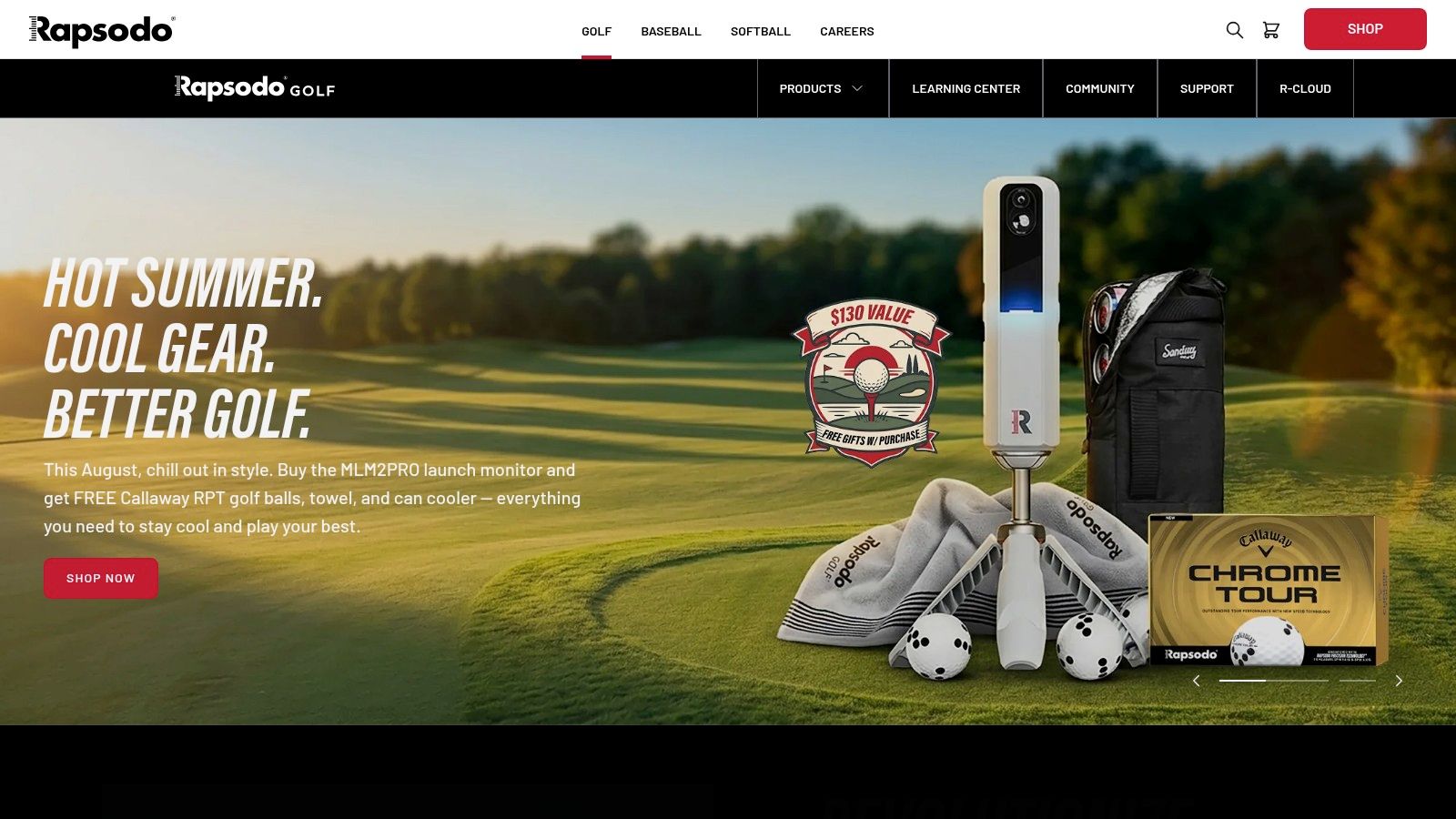
Rapsodo fits golfers who want launch-monitor feedback without giving up a phone-first workflow. It sits between range practice and home practice, and that is where it earns its place. You get measured data, video overlays, and a practice structure that makes a bucket of balls feel more deliberate than a casual “just hit drivers” session.
That split matters because ball-tracking tools keep getting better at supporting data-driven practice. Rapsodo reflects that shift by pairing numbers with video, so you can check whether the move you felt is creating the ball flight you wanted. For golfers who like to compare sessions later, that combination is more useful than raw yardages alone.
Strong feedback, but setup still matters
Rapsodo works best when you give the setup real attention. Alignment and lighting still affect the experience, and indoor spin measurement depends on the right conditions, so the system has limits that show up quickly if you rush the setup. Golfers who expect a one-tap answer usually hit those limits first.
Use it if you want a practice tool that connects range work with simulator-style feedback. If you are fitting clubs or trying to make sense of ball flight changes, a golf ball fitter tool from Dialed Golf helps turn the session into equipment decisions instead of leaving the notes in a video reel.
Official site: Rapsodo Golf
8. FlightScope FS Golf (for Mevo/Mevo+/X3 series)
FlightScope FS Golf is for golfers who already value radar data and want the software to keep up. It pairs with the Mevo, Mevo+, and X3 family, then adds shot tracer, skills challenges, and combine-style practice sessions that make the numbers more usable than a bare launch-monitor feed. It feels like a serious practice companion rather than a flashy app trying to be everything at once.
The strength here is stability. Radar-based tools still have a place because they can offer a trusted baseline for practice, and FS Golf gives you a familiar workflow around that hardware. The optional add-ons also let the platform scale with your needs, which is useful if you don't want to pay for extra analysis before you're ready to use it.
Best for structured practice
FS Golf suits golfers who already know how they like to practice. If you want a skills test, a live data overlay, and the ability to work offline for basic sessions, it fits well. The catch is that the more advanced metrics are tied to add-ons, and indoor setup can be less forgiving than a phone-only tool.
A radar app is only useful when you trust the setup enough to trust the numbers.
Official site: FlightScope FAQ
9. Garmin Golf (app for Garmin wearables and Approach R10)
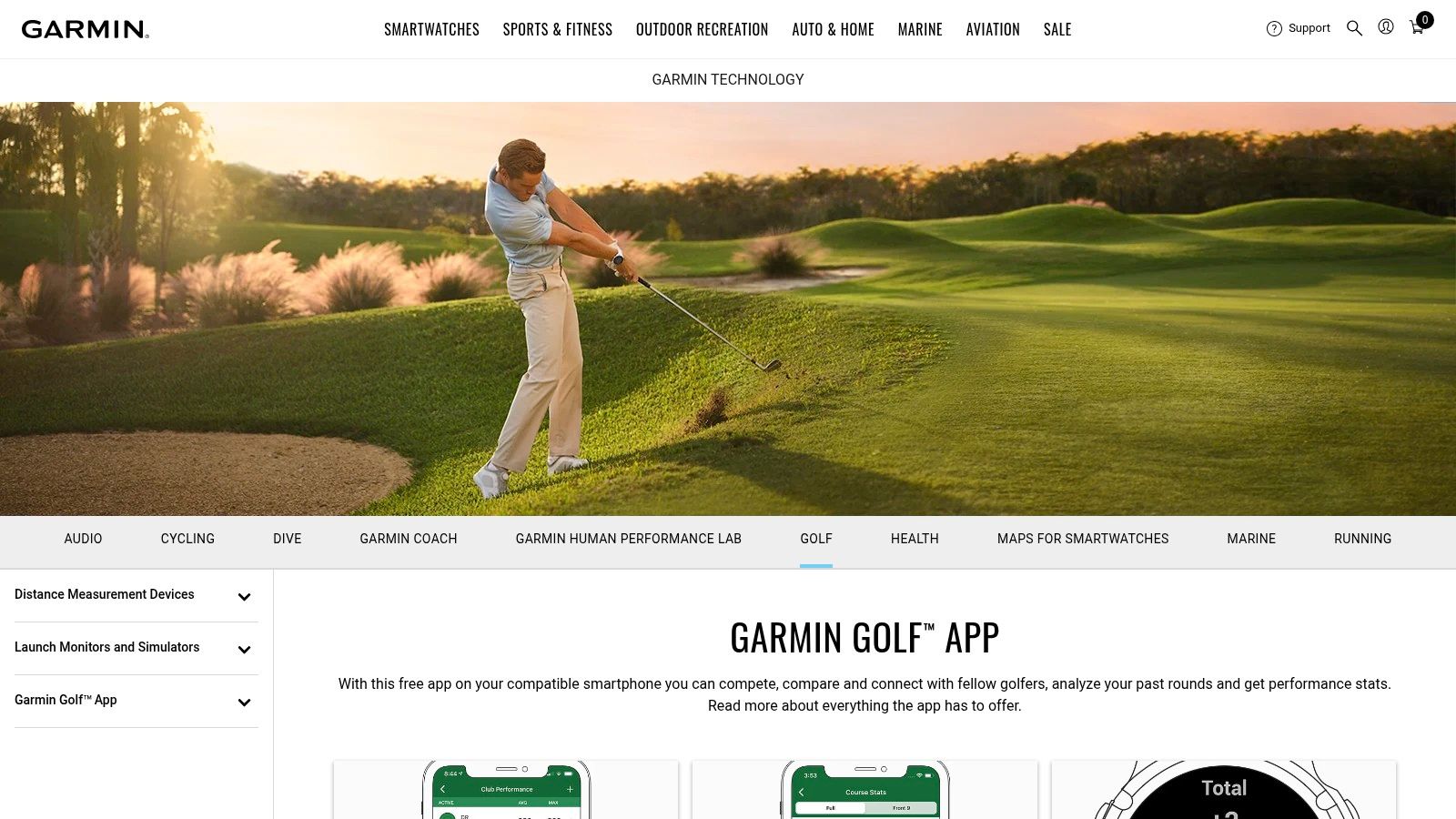
Garmin Golf is the most natural choice if you already live inside Garmin hardware. It connects wearables, CT10 sensors, and the Approach R10 into one ecosystem, so the round and practice data don't feel fragmented. That tight integration is valuable because golf improvement gets messy fast when your on-course scores, range sessions, and simulator reps live in different places.
Garmin's analytics views also reflect the category's shift toward deeper post-round review, with trend indicators and a strokes-gained style perspective in the ecosystem. The app works best for golfers who want their watch, sensors, and launch monitor to speak the same language. If you already own the hardware, that simplicity can be worth more than a fancier standalone interface.
Best for Garmin households
The downside is the obvious one, the best features really make sense when you're already committed to Garmin devices. If you're not, the app can feel more limited than specialized alternatives. Still, for a golfer who uses the R10 and wants a consistent sync path, it's a strong, sensible setup.
Garmin Golf is also a good bridge into simulator work, since the platform gives you a cleaner route from live practice to review. That makes it useful for players who want one ecosystem instead of a patchwork of apps.
Official site: Garmin Golf app
10. Dialed Golf
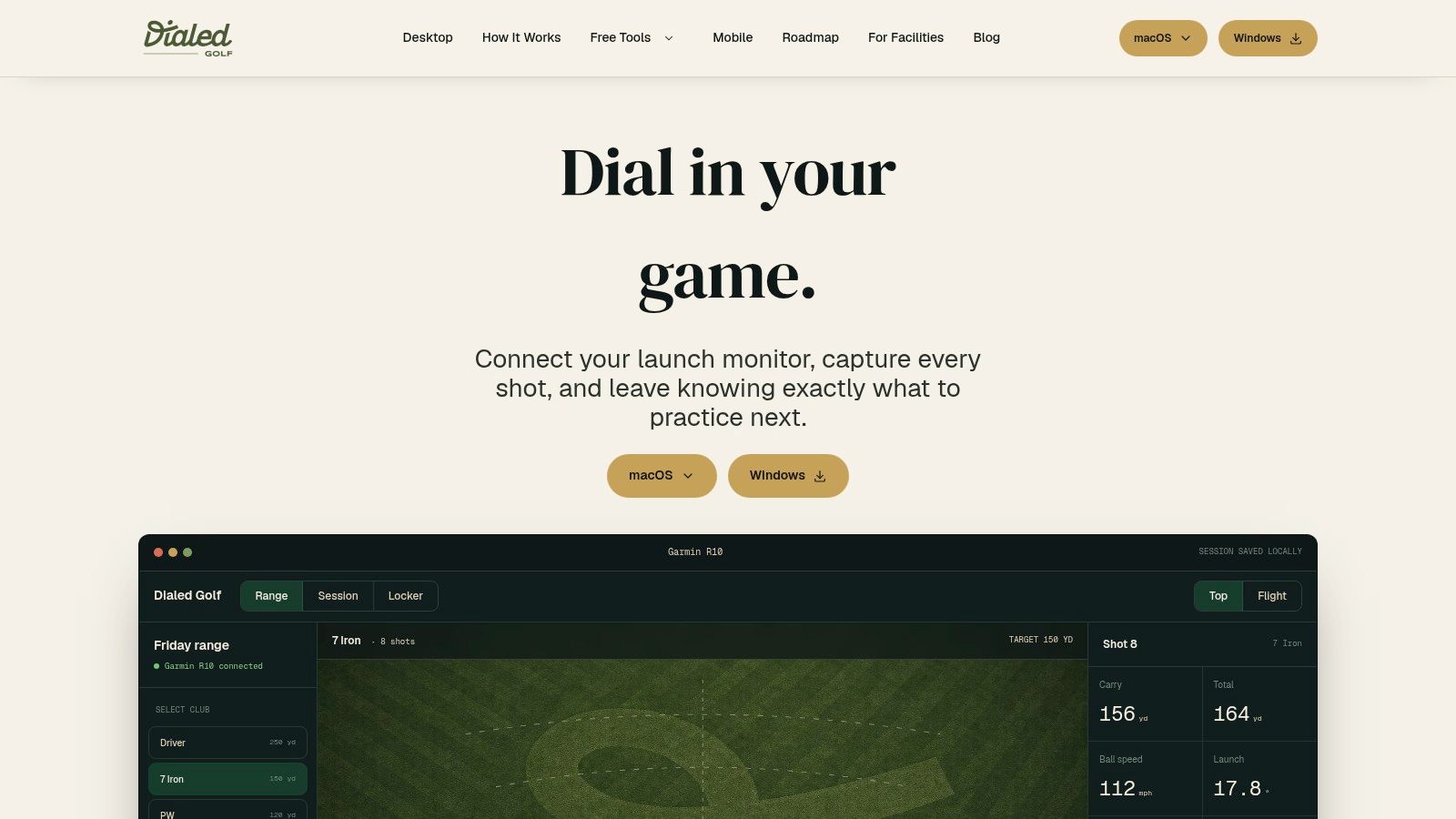
Dialed Golf belongs on this list because it solves the gap that most golf ball tracking apps leave behind. They can show a round, a practice session, or a tracer clip, then stop there. Dialed is built to take raw exports or live launch-monitor sessions and turn them into a repeatable improvement loop, which is what matters once the novelty of data wears off and you still need a clear plan for the next bucket of balls or the next tee time.
The desktop app runs on macOS and Windows, connects live with the Garmin R10, and ingests CSV exports from tools like Garmin, Rapsodo, SkyTrak, FlightScope, and Uneekor. That CSV-first design is a real strength because it treats outside exports as primary data instead of a second-class afterthought. It also buffers shots locally when connectivity gets flaky, which becomes obvious after a few range sessions where the network is the thing holding up your review.
Why it's different
Dialed is organized around clubs, sessions, and shot history, so the app is working around how golfers improve. It highlights carry windows, dispersion patterns, and start direction, which gives you a practical answer to the question every serious player asks after a session, what should I work on next? The free public tools are useful before sign-in too, especially the Golf Ball Fitter, Carry Distance Chart Generator, Wedge Distance Matrix Builder, and Golf Bag Gap Analyzer.
For golfers who want on-course and range data to inform each other, Dialed is the cleanest bridge. It helps you move from “I tracked everything” to a tighter practice plan based on what the ball is doing. The platform also fits naturally into a larger desktop analytics setup like Dialed Golf, which makes it easier to bring together session exports, club gapping, and shot trends in one place.
Official site: Dialed Golf
Top 10 Golf Ball Tracking Apps, Feature Comparison
| Product | Key features | UX ★ | Value 💰 | Target 👥 | Unique Strengths ✨ |
|---|---|---|---|---|---|
| Arccos (Caddie + sensors) | Auto shot tracking (sensors/Watch), strokes‑gained, AI caddie | ★★★★☆ | Subscription (annual) 💰💰 | 👥 On‑course players seeking deep analytics | ✨ Tour‑style analytics, large course DB |
| Shot Scope (tags & watches) | Tag/watch auto tracking, MyStrategy, web dashboard | ★★★☆☆ | Hardware + no subscription (lifetime) 💰 | 👥 Value‑focused golfers wanting no recurring fees | ✨ Lifetime analytics, strong long‑term value |
| V1 Game (phone/Watch) | Watch auto‑sensing, strokes‑gained, sensor‑free option | ★★★☆☆ | Freemium / in‑app tiers 💰 | 👥 Watch users & coaching clients | ✨ Sensor‑free auto tracking; V1 coaching tie‑ins |
| Golfshot (Free → Pro/Champions) | GPS, auto‑putt, 3D flyovers, GHIN integration | ★★★★☆ | Free → Pro/Champions tiers 💰💰 | 👥 Round managers wanting GPS + course tools | ✨ Mature DB, wearable support, GHIN posting |
| 18Birdies | GPS yardages, scorekeeping, Golf School practice content | ★★★★☆ | Free + Premium subscription 💰 | 👥 Social players & practice‑oriented users | ✨ Polished UX, community & structured lessons |
| Toptracer Range | Live ball‑trace, per‑club history, skill games, leaderboards | ★★★★☆ | Pay‑per‑range (range fees) 💰 | 👥 Range visitors wanting fun/competitive practice | ✨ TV‑style tracers, global leaderboards |
| Rapsodo Golf (MLM/MLM2PRO) | Mobile LM, Impact Vision video, sim library, Combine games | ★★★★☆ | Device + Premium features/membership 💰💰 | 👥 Home/range users who want video + sim | ✨ Dual‑camera video + gamified practice |
| FlightScope FS Golf | Radar tracking (Mevo/Mevo+/X3), video, skill challenges | ★★★★☆ | Device + optional pro add‑ons 💰💰💰 | 👥 Serious users & coaches needing pro metrics | ✨ Proven radar accuracy; scalable pro packages |
| Garmin Golf (wearables & R10) | Watch/sensor sync, shot maps, R10 simulator features | ★★★☆☆ | Device ecosystem + Garmin membership for advanced tools 💰💰 | 👥 Garmin device owners & R10 users | ✨ Tight hardware integration; green contours/sim |
| Dialed Golf 🏆 | Desktop (macOS/Win) + CSV import, live Garmin R10 pairing, session locker & insights | ★★★★☆ | Free public tools; facility memberships/contact for pricing 💰 | 👥 Practice‑focused golfers & facilities | 🏆 CSV‑first practice analytics; local shot buffering; single prioritized practice target; free tools w/out sign‑in |
Connecting On-Course Play with Range Practice
The best golf improvement happens when your on-course data changes your range work, and your range work changes what happens in the next round. That's why the smartest setup usually starts with an on-course app like Arccos, Shot Scope, V1 Game, or Golfshot. Those tools tell you where you're losing strokes, which is more valuable than guessing which part of your game feels off after a bad round. Golf app adoption is clearly mainstream among frequent players, with the NGF reporting that 78% of Core golfers who play 8+ rounds per year have at least one golf-specific app on their phone (NGF), so the question isn't whether to track, it's what to do with the tracking.
Once the weak spot is obvious, the range app should match the job. If the issue is distance control, a launch-monitor app like Rapsodo or FlightScope FS Golf gives you ball-flight feedback and session structure. If you practice at a facility with the right infrastructure, Toptracer Range is a strong venue for comparing carry, dispersion, and club performance in a controlled environment. For golfers who want a smoother transition from practice to actual improvement, the missing piece is often a desktop layer that can normalize the data and prioritize the next session.
That's where Dialed Golf fits naturally. It can take live capture from a Garmin R10 or import CSVs from multiple launch monitors, then organize every shot into clubs, sessions, and trends. Instead of leaving the range with another cloud of numbers, you get carry windows, dispersion patterns, and a clear next target, which is what turns a golf ball tracking app from a novelty into a real training system.
If you're tired of guessing whether practice is changing your game, start connecting the dots now. Use a round-tracking app to identify the problem, a range tool to work on it, and Dialed Golf to keep the whole improvement loop organized so your data leads somewhere useful.