

The number on the screen can feel random the first time it shows up next to a good swing. One shot says 2,650 rpm, another says the ball fell out of the air, and the only thing the golfer knows for sure is that the monitor has a opinion and no obvious explanation.
That confusion is normal. A spin golf ball conversation gets messy fast because spin is not one thing, and it doesn't behave the same way with a driver, a 7-iron, or a wedge. The useful question isn't whether a ball is “spinny” in the abstract, it's which spin profile it gives on the clubs and shots that matter most.
Table of Contents
- Staring at a Spin Number You Don't Trust Yet
- What Spin Actually Means on a Golf Ball
- How Spin Shows Up Across Driver, Irons, and Wedges
- Why One Ball Does Not Spin the Same Everywhere
- Cover, Construction, and the Spin Profile Behind the Numbers
- Measuring Spin With a Launch Monitor
- Why Robot Spin and On-Course Spin Don't Always Agree
- Putting Spin to Work in Your Next Practice Session
Staring at a Spin Number You Don't Trust Yet
A golfer finishes a range session, glances at the tablet, and sees driver spin sitting beside launch, ball speed, and carry. The number is there, but it doesn't yet mean anything useful. It feels like a test score without the answer key.
That's where most spin advice falls apart. People try to judge a ball by one number, then wonder why the same model looks fine with the driver, different with a 7-iron, and completely different around the green. A better lens is simple, treat spin as per club, per condition, per strike.
Start with the shot, not the label
A ball is only “spinny” in relation to something else. If a driver ball launches well but falls out of the air, the issue might be too much spin, too much dynamic loft, or just a strike that didn't match the face angle. If a wedge shot checks hard, the same ball may be doing exactly what a golfer wants.
Practical rule: a spin number matters only after the golfer knows which club produced it and what the ball did in the air and on landing.
That's why launch-monitor coaching works better than ball-category slogans. It lets the golfer move from “Is this a low-spin ball?” to “What does this ball do with my driver, my irons, and my wedges?” The rest of the article builds that vocabulary, then turns the screen into something the golfer can use.
What Spin Actually Means on a Golf Ball
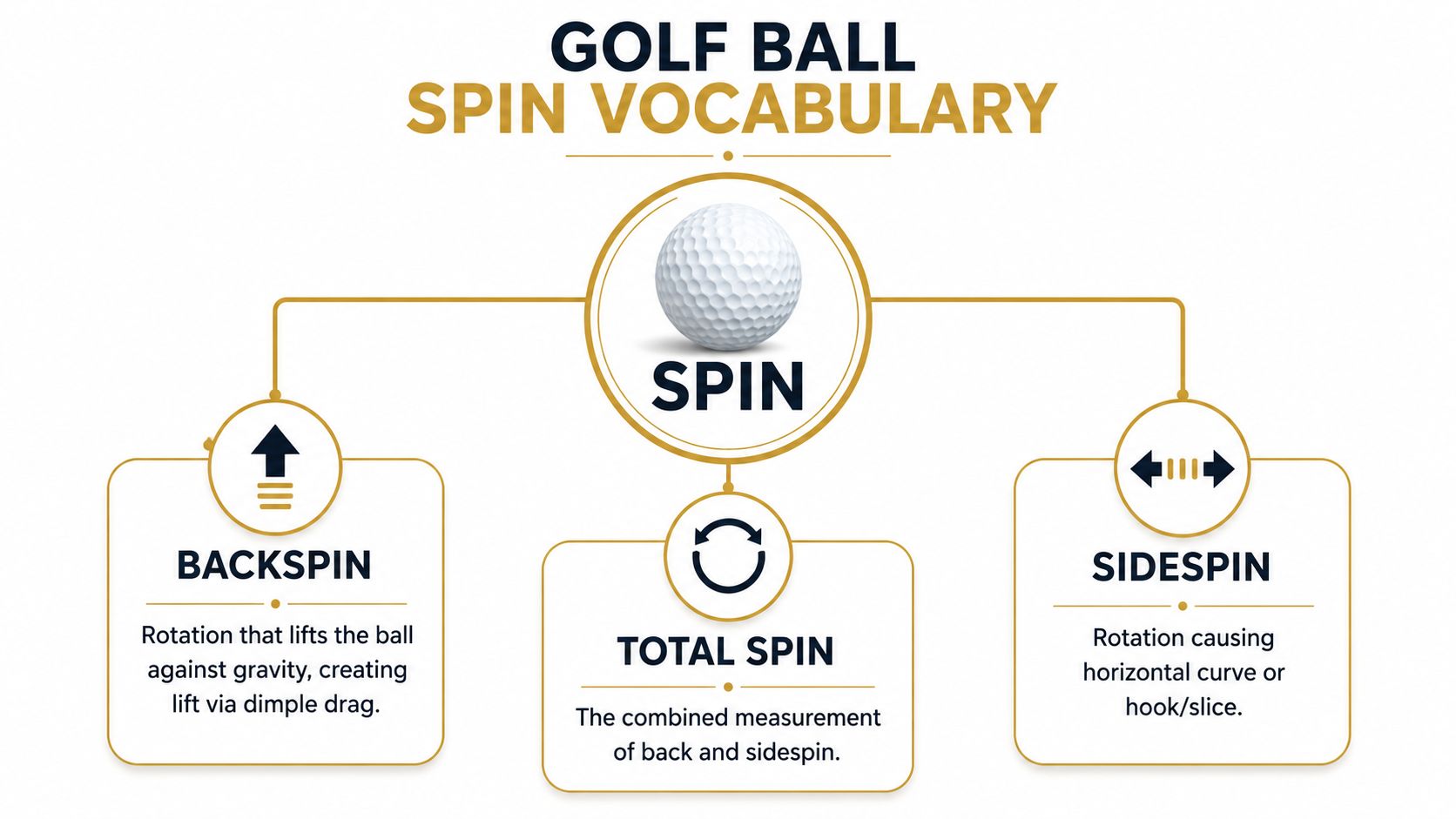
A golf ball in flight is rotating around an axis, and that rotation changes how air moves over the surface. Backspin is the part that helps the ball stay in the air longer and land with more control, because the dimples create turbulent boundary-layer behavior that reduces drag and delays airflow separation to roughly 110° to 120° from the front of the ball, with drag cut by over 50% compared with a smooth sphere, according to golf ball aerodynamics testing and history. The dimple pattern matters so much that golf balls are typically built with about 300 to 500 dimples and even a tiny 0.001 inch change in dimple depth can alter trajectory and total distance, as noted in the same source.
The terms that show up on a launch monitor
Spin rate is the raw count, usually shown in revolutions per minute. Spin axis is the tilt of that rotation, and that tilt is what turns spin into curve. A ball with an axis tilted left curves left, and one tilted right curves right.
That's why a launch monitor can show two shots with similar spin rates but very different shapes. One shot may be mostly backspin, the other may carry a side-to-side tilt that creates a draw or fade. The monitor isn't just counting rotation, it's describing how that rotation is leaning through the air.
Why the dimple story matters
A smooth sphere would create a much larger wake and more drag. Dimples change the airflow so the ball can keep moving efficiently, which is why a scuffed nineteenth-century ball often flew farther than a new smooth one. That historical oddity helped settle the modern idea that surface texture improves flight performance, not just feel.
How Spin Shows Up Across Driver, Irons, and Wedges
A ball can look perfect on one club and wrong on another. That is the part golfers often miss. Spin is not a single label you pin on a model, it is a club-by-club pattern that changes with loft, impact, and the shot you are trying to hit.
With the driver, spin has to stay in a workable window. Too much and the ball climbs, stalls, and gives away carry. With irons, the job changes. Spin has to help the ball come down steep enough to hold a green. With wedges, spin matters because it helps the ball check, land shorter, and release in a more predictable way.
Three clubs, three different jobs
A driver shot that spins too much can balloon. The ball rises, hangs, and loses useful distance. A low-spinning iron shot can come in flat and skid forward. A wedge shot needs enough spin to create a shorter first bounce and a calmer second bounce, especially on firmer greens.
| Club | Typical Spin (rpm) | What the Spin Does |
|---|---|---|
| Driver | Qualitatively lower than irons and wedges | Helps carry stay efficient and keeps roll available after landing |
| 7-iron | Moderate and controlled | Helps the ball descend steeply enough to hold a green |
| Wedge | Qualitatively high | Creates check, short rollout, and better stopping power |
The useful question is not whether a ball is “high spin” or “low spin” in the abstract. It is whether that ball matches the club in your hand.
A launch monitor makes this easier to see because the same ball can show a different spin profile as loft changes. If you want a practical check on wedge contact and spin, this guide on how to hit a wedge is a useful place to start.
The stop-and-roll tradeoff
On the tee, less spin often gives you more usable rollout. In the middle of the bag, enough spin helps the ball land with authority instead of skidding past the target. Around the green, more spin shortens the first bounce and settles the second bounce.
That is why ball choice should be read club by club. A golfer who only looks at one headline number can miss the more useful question, which is whether the ball's spin fits the job each club has to do. Once you start separating driver, iron, and wedge numbers, the monitor picture becomes much clearer.
Why One Ball Does Not Spin the Same Everywhere
Recent robot testing makes this clearer than most ball marketing ever does. In MyGolfSpy's 2026 robot test, the longest driver ball, PR4, still spun 2,281 rpm, while the third-longest, Tour Response, spun 2,055 rpm. The highest-spinning balls changed again at slower iron speed, and some ionomer balls out-spun many urethane models in certain categories, according to the same test data and the spin chart at Stymie Golf.
Rankings move by club
That's the part golfers often miss. A ball can behave like a high-spin option off the driver, then drift into the middle of the pack with irons, then fall lower or higher again with wedges. The reason is simple, the ball is being asked to interact with different lofts, different grooves, and different impact conditions each time.
| Ball Model | Driver Spin Rank | 7-Iron Spin Rank | Wedge Spin Rank |
|---|---|---|---|
| PR4 | Longest driver ball, 2,281 rpm | Shifts by club in the test | Shifts by club in the test |
| Tour Response | Third-longest driver ball, 2,055 rpm | Shifts by club in the test | Shifts by club in the test |
| Ionomer models | Some ranked above urethane balls in certain categories | Some ranked above urethane balls in certain categories | Some ranked above urethane balls in certain categories |
Why the same ball changes
Loft changes how much the face can add spin. Face angle and delivery affect how the ball leaves the club. Groove interaction matters more as loft rises, especially on partial and wedge shots. Clubhead speed changes the amount of force the cover has to manage at impact.
That's why the wrong question is, “What ball spins the most?” The better question is, “Which ball gives the spin profile needed for driver, irons, and wedges?” The test data shows why that wording matters, because the market is clustered in the middle more often than people assume.
Cover, Construction, and the Spin Profile Behind the Numbers
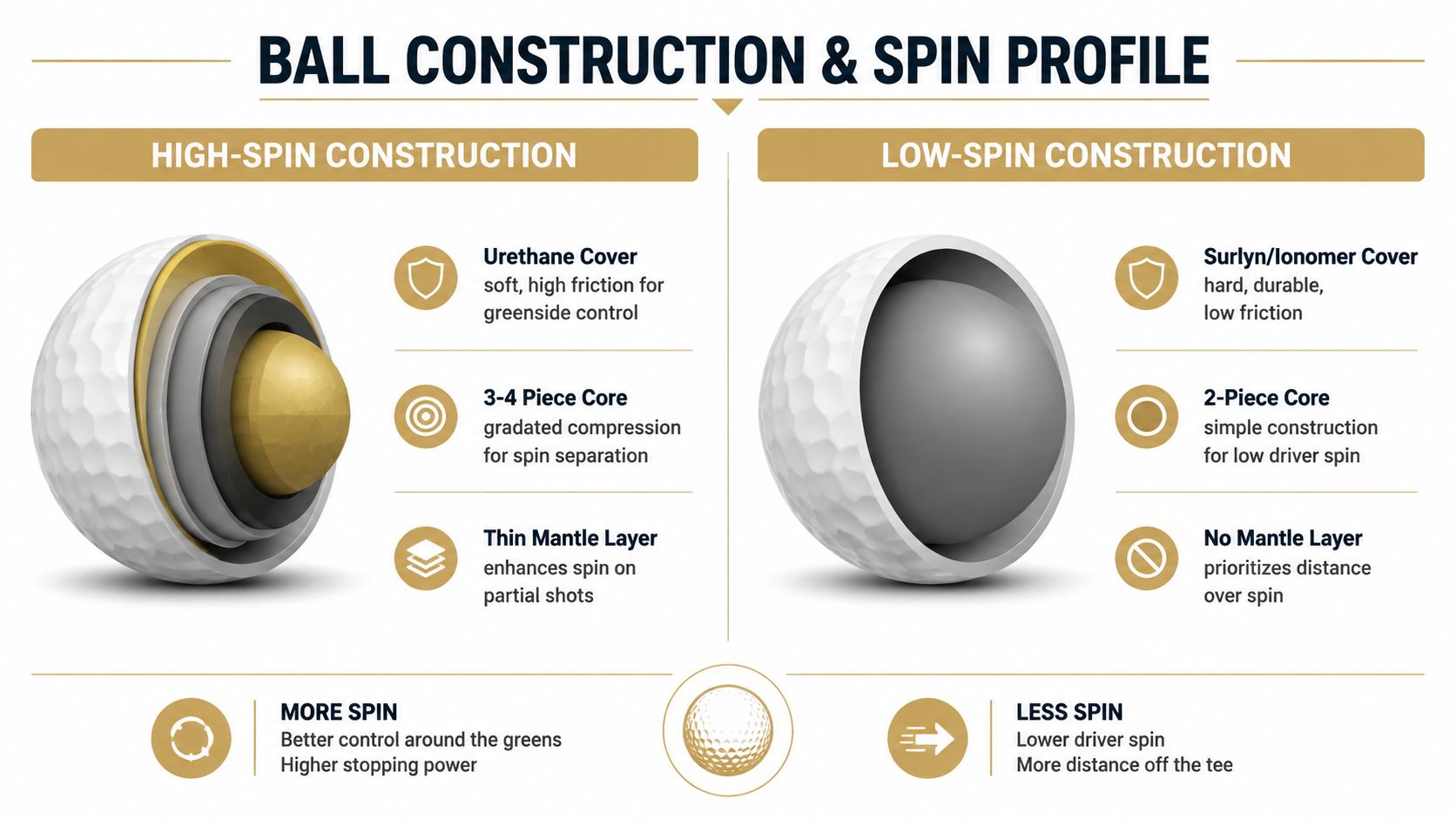
The spin profile starts in the build. A urethane cover usually brings more short-game grip, while surlyn or ionomer covers tend to reduce spin and lean toward distance. The ball's core and mantle layers shape how much spin separation the golfer sees between driver and wedge, which is why two balls can feel similar yet behave very differently on a monitor.
What the layers tend to do
A softer outer cover generally interacts more with wedge grooves, so the golfer sees more check on partial shots. A firmer outer cover usually sheds some of that friction, which can help the driver stay more efficient. Inside the ball, the layer stack matters too, because the way energy transfers through the core and mantle changes how the ball responds at different speeds.
Matching build to usage
A golfer who mostly wants green-side control usually needs a different build intent than a golfer who wants a stable driver flight and less curvature. That doesn't mean every softer-feel ball is automatically better for scoring. It means the golfer should connect the construction to the shots played most often.
- Soft urethane builds: More short-game friction, better when wedge control matters most.
- Firm ionomer builds: Less spin, useful when driver efficiency and straighter full shots matter more.
- Layered constructions: Designed to separate spin behavior by club, so the ball can act differently on tee shots and partial wedges.
The build does not tell the whole story, but it explains why the same spin number can feel very different from one ball to another. The golfer shopping for a spin golf ball should think in terms of behavior by club, not surface-level category labels.
Measuring Spin With a Launch Monitor
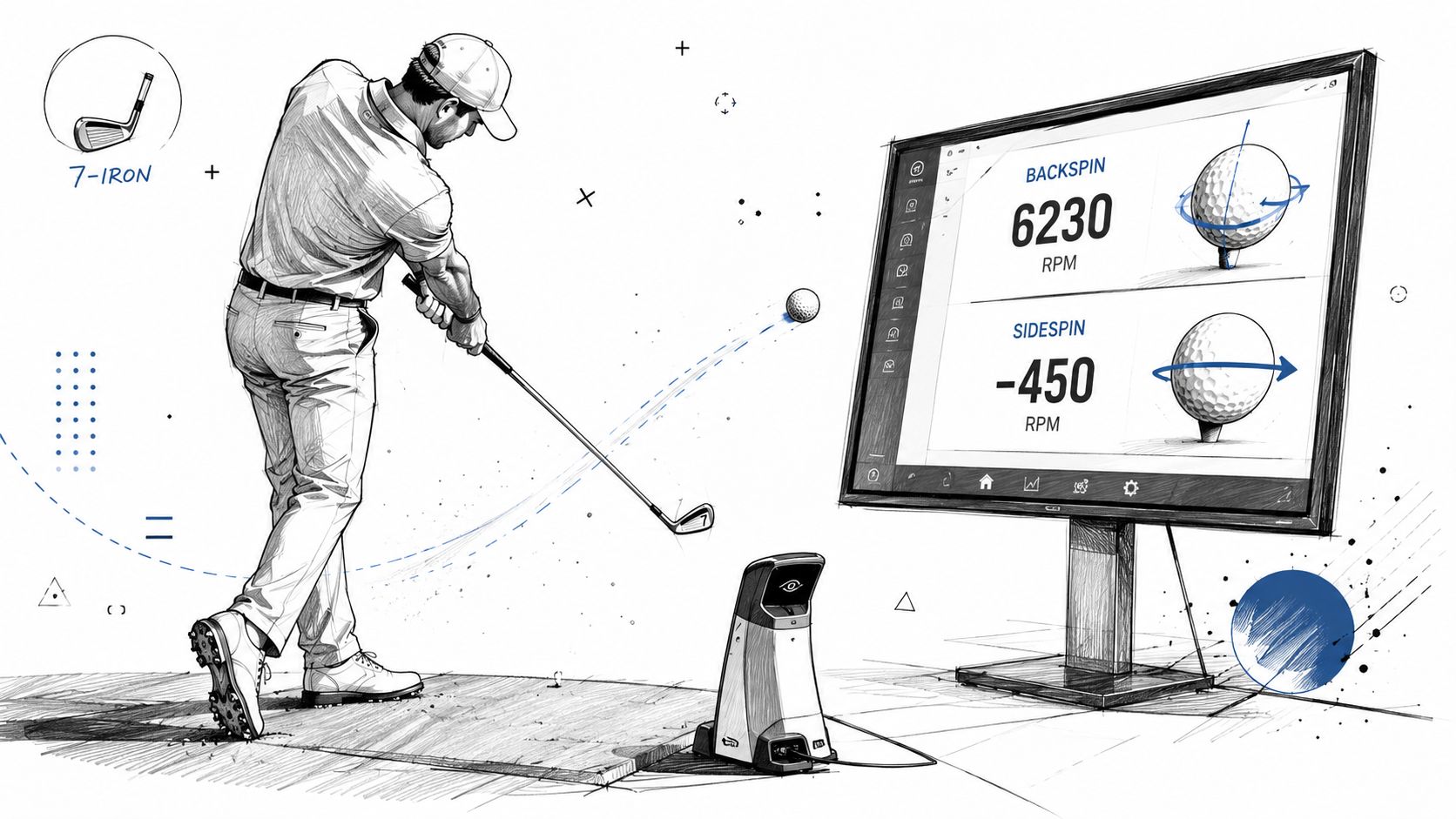
A launch monitor makes spin easier to read when the test is controlled. It is tracking clubhead speed, ball speed, launch angle, and the ball's movement right after impact. If contact is inconsistent, the spin number can mislead, so a clean strike matters more than a single impressive reading.
The better habit is to compare sessions, not isolated swings. A golfer who saves practice files can review them later, and a driving range launch monitor guide can help frame how that workflow fits a practice setup. Compatibility notes for launch-monitor workflows also show that many systems allow CSV imports or direct connections, which lets a golfer organize data by session instead of relying on one device path, as noted in launch-monitor coaching workflow coverage and device compatibility documentation.
What makes the reading trustworthy
A useful spin session repeats the same setup on purpose. Warm up first, keep tee height steady during driver testing, and avoid changing ball models, clubs, or strike intent all at once. If the monitor shows spin axis, that extra number helps explain why two shots with similar spin rates can curve differently.
Good practice: compare one ball against another only when the club, lie, and session conditions are as close as possible.
For a range workflow, a golfer can keep one session on driver, another on 7-iron, and another on wedge, then line the files up later and compare the spin profile club by club. That is more useful than chasing one pretty shot, because spin should be read as a pattern by club and condition, not as a single label for the whole bag.
The video below reinforces the same idea in motion, especially for readers who want to connect screen numbers to actual ball flight.
Why Robot Spin and On-Course Spin Don't Always Agree
Robot testing is useful, but it's still a snapshot. Robots hit from neutral setups, with repeatable strikes and controlled conditions. On the course, the golfer is dealing with wet turf, firm turf, imperfect lies, cold air, partial contact, and grooves that aren't always clean.
Why the course changes the picture
Wind changes how much spin matters after the ball leaves the face. Grain and pin position change how a wedge shot behaves near the green. A fluffy lie can make the club interact with the ball differently than a tight lie, and a scuffed ball can behave differently from a fresh one.
That's why a leaderboard-style ranking can only tell part of the story. A ball that looks strong in one environment may not produce the same result on a damp fairway or in colder conditions. The golfer needs the actual conditions written down beside the number, or the comparison gets blurry fast.
A simple way to judge spin outside
- Hit five shots off the same lie: Use one lie type, then compare only after the small sample is complete.
- Log the environment: Write down wind and temperature beside the spin rate.
- Compare sessions, not moments: Look for the pattern across multiple visits instead of chasing one standout reading.
The practical goal is not to make robot numbers useless. It's to keep them in their lane. They're a good starting point, but the course still gets the final vote.
Putting Spin to Work in Your Next Practice Session
Start with one ball and one baseline. Record spin on the driver, 7-iron, and wedge across repeated shots, then compare a second model against the same club-by-club profile. That gives the golfer a real reference point, not a marketing claim or a buddy's favorite ball.
A fitting conversation works better when spin rate and spin axis are discussed together. Spin rate shows how fast the ball is turning. Spin axis shows whether that turn is tilted enough to curve the shot. If a fitter changes cover or construction, those shifts should show up in both numbers.
The same approach works in a structured practice workflow. Dialed Golf tracks launch-monitor spin data and organizes it with the rest of the session, so the golfer can compare one visit with the next instead of relying on memory. That matters when a swing change, weather shift, or lie change makes the same ball behave differently.
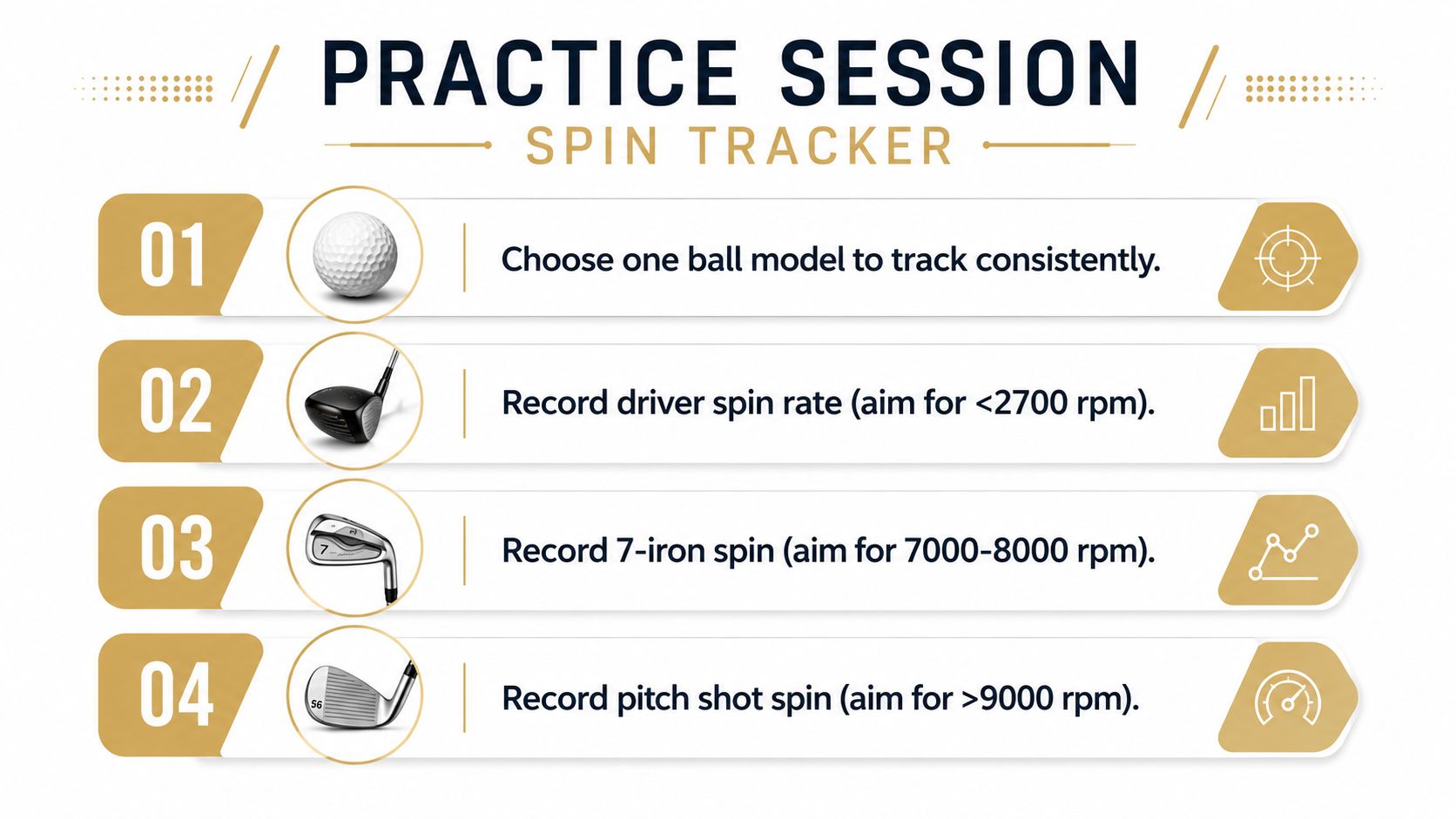
A practical next step is simple. Choose a baseline ball, schedule a launch-monitor session, test one softer-feel alternative, and write the conditions beside every reading. For a fuller comparison, use a gap analysis to see where one ball gives up spin and where it holds its shape. That shifts the question from “which ball spins more?” to “which ball gives the right spin on each club?”