

Chapstick on a driver doesn't reliably fix a slice, and controlled testing showed only 0.3 yards of total distance, about 3.3 yards of carry, and roughly 90 RPM more spin on lubricated shots compared with a clean face. In plain terms, it can change the strike a little, but it doesn't straighten the ball in any dependable way.
That's why the myth hangs around anyway. A golfer sees one clipped video, hears one buddy swear by it, and thinks a thin layer of lip balm might be the easiest swing fix in golf.
Table of Contents
- Why Golfers Still Try Chapstick on a Driver
- The Physics of Lubrication on a Driver Face
- What the Numbers Actually Show
- Why It Is Banned in Competition
- Diagnosing the Slice with Launch Data
- Better Alternatives Worth Trying Instead
- A Simple Decision Checklist Before You Try It
Why Golfers Still Try Chapstick on a Driver
A golfer steps onto the range, pulls a tube of Chapstick from the bag, and stares at the driver face like he's about to solve the whole slice problem in 10 seconds. His friend is already laughing, because everyone at the range has heard the story, and half the bay thinks it might work just enough to be worth a try.
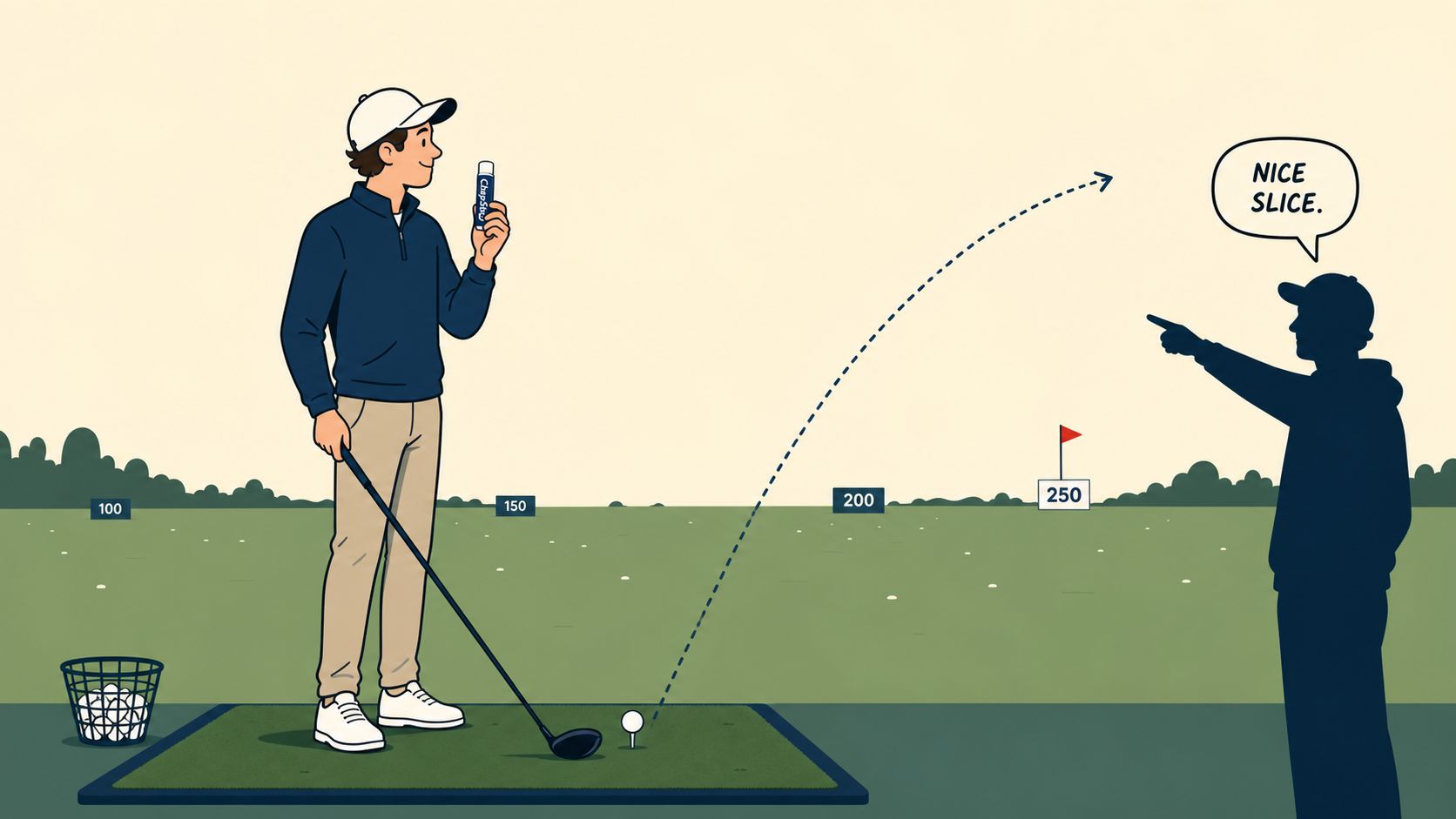
That's the hook. The idea feels simple enough to be true, a little lubrication should help the ball slide off the face instead of glancing away.
Practical rule: If a fix sounds like it bypasses swing mechanics completely, it usually solves less than it promises.
The reason the myth survives is that golf shots are messy. One strike can start right and curve less, another can start straighter and still leak, and a small change in spin can look dramatic in the air even when the result on the ground barely moves. Controlled testing didn't show a dependable fix, though, and the results were inconsistent enough that the clean face still won more often than the lubricated one.
The mix of hope and uncertainty is why golfers keep reaching for the tube. The trick looks like a shortcut, it's easy to test, and it gives you something tangible to do when the driver keeps peeling right. The question isn't whether it feels clever. It's whether the ball flight changes in a way that matters.
The Physics of Lubrication on a Driver Face
A driver works like a contact problem, not a magic wand. When the ball leaves the face, the amount of friction between the cover and the grooves helps decide how much spin gets “grabbed” at impact.
A wet baseball glove versus a dry one. The wet surface lets the ball slide a little more, while the dry surface grabs it more firmly, so the ball leaves with a different spin pattern. On a driver, less friction can sometimes reduce how much the face imparts sidespin, but that doesn't mean it always helps the shot start straighter or curve less.
Why the effect is conditional
The ball doesn't care about the lubricant in isolation. It cares about where on the face you hit it, how the face is delivered, and what the launch geometry looks like at impact. A toe strike, a heel strike, a high-face strike, and a low-face strike all respond differently because the club is already changing launch and spin before any Chapstick enters the picture.
That's why a lubricant can look impressive in one swing and useless in the next. If the face is open enough, or the strike is poor enough, changing friction won't erase the underlying delivery. It can only slightly alter the relationship between the face and the ball.
The cleaner your strike, the easier it is to compare any face treatment fairly.
That's the key coaching idea. Chapstick-on-driver is a physics demo first, and a performance claim second. It shows that friction matters, but it also shows that friction is only one piece of a much bigger launch puzzle.
What the Numbers Actually Show
The most useful part of the Golf Digest test is that it didn't rely on a single lucky drive. It compared five well-struck shots per substance, using Chapstick, petroleum jelly, and cooking spray against clean-face shots, then looked at the pattern across the sets. The outcome was not a clean win for lubrication.
Across the test, the lubricated drives produced 90 RPM more spin on average, gained only 0.3 yards of total distance, and added about 3.3 yards of carry on average, while launch angle increased by roughly 1 degree. Those are real changes, but they're small enough that most golfers would never call them a fix, especially not for a slice that shows up every round. The controlled test is summarized in the breakdown at Can You Kiss Your Slice Goodbye.
What won more often
The clean face outperformed the lubricated face in 7 of 10 shot sets. When the clean face was better, it averaged a 9.9-yard advantage. When lubrication helped, it averaged 5.7 yards in the minority of cases.
That split matters more than any isolated “best shot.” A golfer can easily remember the one drive that held the fairway and forget the three that barely changed, or got worse. That's how range myths get promoted, one memorable result at a time.
| Test result pattern | What it suggests |
|---|---|
| Clean face won in 7 of 10 sets | The lubricant wasn't dependable |
| Lubrication helped in the minority | Any benefit was inconsistent |
| Distance changes were small | Not enough for a reliable slice fix |
If you want to compare your own carry patterns instead of trusting a lucky rep, a carry chart like Dialed Golf's Carry Distance Chart gives you a cleaner way to see whether a setup change is moving the window.
The bottom line is simple. The numbers don't support chapstick on a driver as a dependable way to straighten the ball. They show a small physics effect, then show that the effect is too inconsistent to trust.
Why It Is Banned in Competition
The rule issue is clearer than the performance issue. Under the Rules of Golf, applying any substance to the clubhead to alter performance is prohibited during a round, so chapstick-on-driver is treated as a nonconforming, competition-illegal modification. Independent golf coverage also groups chapstick, Vaseline, WD-40, and car wax together as substances that aren't allowed when they change how the club performs, and notes that the restriction exists because they affect ball flight.
Where cleaning ends and modification begins
Normal cleaning is fine. Wiping dirt, grass, or moisture off the face is part of using the club properly. The problem starts when a player deliberately coats the clubhead with something intended to change the strike characteristics or reduce friction in a way that affects performance.
That's why the line matters. The rule makers aren't banning every trace of moisture or every towel wipe. They're banning deliberate alteration of the club's performance characteristics by applying a substance to the head other than for cleaning, which is the key distinction golfers often miss.
The practical answer is easy. If you'd hesitate to explain the treatment to a rules official, it's probably not a safe competition habit.
The range and the round are different environments. A practice-only experiment can help you understand how friction affects contact, but that doesn't make the same trick legal when scores count. Once you cross into competition, the question stops being “does it work?” and becomes “is the club conforming?” and in this case the answer is no.
Diagnosing the Slice with Launch Data
A slice is usually a delivery problem, not a lubrication problem. The ball curves because the clubface and swing path are sending it off with the wrong spin direction, so the first job is to measure impact instead of chasing a coating that may only hide the symptom for a few swings.
Launch-monitor numbers make that diagnosis much clearer. Club path, face angle, launch angle, spin axis, and smash factor show whether the face is too open, the path is too left, the strike is too low on the face, or the contact quality is falling apart. Those numbers matter because they separate a face issue from a path issue and keep you from fixing the wrong part of the swing.
A useful practice session does not ask, “Did the shot look better?” It asks whether the pattern changed. Did the start line move? Did the spin axis tilt less to the right? Did carry tighten up? Those are the signs that a swing change is working, and they are much more honest than a tube of lip balm.
A launch monitor gives you the same kind of feedback a coach would give after watching the strike pattern, only with cleaner evidence. Friction changes can alter the feel at impact, but they do not replace the need to see what the face and path are doing. If the ball still starts right and keeps curving right, the surface treatment did not solve the delivery problem.
If the same miss keeps showing up, the next adjustment should come from data, not from a gimmick. A structured check with Dialed Golf's Golf Bag Gap Analyzer fits that coaching question better than a face-treatment experiment, because it helps you compare clubs and distances instead of guessing from memory.
I have seen the chapstick trick used mostly as a distraction. It gives the golfer something to tinker with, but it does not answer the question that matters, which is why the ball is curving the way it is. Once you start reading the launch data, the slice stops looking mysterious and starts looking measurable.
Better Alternatives Worth Trying Instead
A golfer who wants less curve has better places to spend effort than the driver face. Start with the parts of the swing that shape the face-to-path relationship, then move to equipment only if the launch data says the club setup is part of the problem.
Three fixes that deserve a real test
- Grip and setup work: A stronger grip, cleaner alignment, or a more neutral ball position can help a golfer deliver the face more predictably without chasing a band-aid. Those changes affect how the hands return to the ball, which matters because a small face change can send the ball on a very different start line.
- Face-awareness drills: Short swings, split-hand rehearsals, and start-line focus drills teach you what the face is doing instead of hoping a surface coating will cover it up. If the ball still starts right and keeps peeling away, the delivery pattern is still there, and the drill gives you a way to see it.
- Loft or shaft fitting: If your launch-monitor numbers show a clear mismatch, the fix may be in the club build, not in the swing feel. Before changing clubs, use the Golf Ball Fitter to see how ball construction interacts with your swing speed and launch conditions.
A range test with lubrication still has a place, just not as a scoring strategy. Used once, it can be a neat demonstration of how friction changes contact and spin, the same way a little oil changes how hard two surfaces can slide against each other. Used repeatedly in practice, it risks teaching you to lean on a variable that will not be there on the first tee.
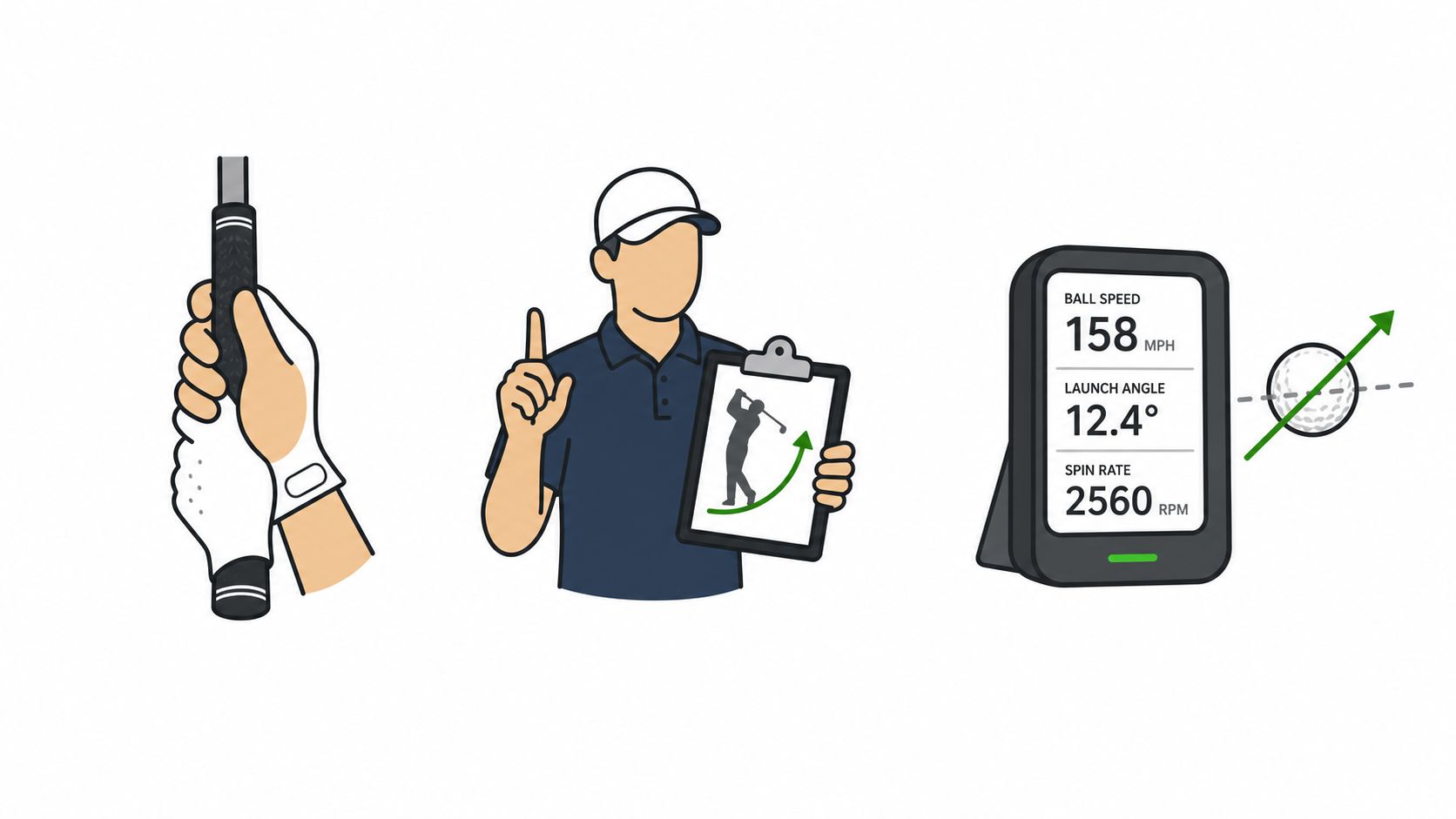
The best golf fixes usually feel less dramatic than internet myths. They are slower, more boring, and more repeatable, which is exactly why they work better. If the numbers point to contact quality, path, or gapping, those are the levers worth pulling.
A Simple Decision Checklist Before You Try It
Don't use Chapstick on a driver in competition, because the rule is clear and the club becomes nonconforming. If you want to test it on the range, treat it as a physics demo, not a training method, and compare it against clean-face shots so you can see whether the result is real or just memorable.
A better practice habit is to track the shot pattern, not the story around the shot. Look for carry, spin axis, and dispersion changes across sessions, then keep the change only if the data says it's helping.
When you want that history organized, use a tool that can hold the session together instead of forcing you to guess from screenshots and memory. That's the kind of workflow that turns a range experiment into a useful coaching decision.
If you want to test swing changes, compare sessions, and stop guessing about what fixed the miss, visit Dialed Golf and use it to organize your launch-monitor data into something you can act on. It's a cleaner way to study a slice than chasing a tube of lip balm, and it gives you a repeatable record of what really changes your ball flight.