

You're standing in the fairway, long second shot left, and the decision looks simple until you look in the bag. The 4-iron never felt trustworthy, the 4-hybrid looks easier, and the 7-wood might launch higher than both. That's where a hybrid golf club lofts chart earns its keep, because the number on the sole is only a category label, not a promise about how the club will fly.
A good fitter starts with loft because it's the one variable that gives the rest of the bag structure. Once you know the actual lofts, you can stop guessing at replacements, see where hybrids bridge long-iron gaps, and spot the overlaps that make a bag feel crowded even when it looks balanced on paper.
Table of Contents
- Why Every Golfer Needs a Hybrid Loft Reference
- Complete Hybrid Golf Club Lofts Chart
- How Manufacturer Variations Change the Chart
- How Loft Affects Ball Flight and Distance
- Finding and Filling Yardage Gaps with Hybrids
- Hybrid Versus Long Iron Versus Fairway Wood
- Using Launch Monitor Data to Validate Your Setup
- Common Loft Chart Mistakes and How to Avoid Them
- Quick Reference Checklist for Your Next Bag Audit
Why Every Golfer Needs a Hybrid Loft Reference
You get to a par 5 with a number that makes the decision awkward. The hole asks for something in the middle of your long clubs, and the choice is rarely as clean as “4-hybrid or 7-wood.” One of them might be too strong, the other too high, and the wrong pick leaves you with a partial wedge from a distance you didn't plan for.
That's why a hybrid loft reference matters. It gives you a neutral starting point before ego, brand loyalty, or a salesman's label start steering the decision. The sole stamp says “4-hybrid,” but that doesn't tell you whether the head is behaving like a long iron replacement or sitting closer to a fairway wood slot.
The real problem is not the number, it's the assumption
Most golfers don't lose distance because they chose the wrong “number.” They lose it because they assume every manufacturer organizes hybrids the same way. In practice, that assumption creates overlap at the top of the bag, especially when a hybrid replaces a club that already had a strong loft or a long shaft.
Practical rule: if you're comparing hybrids, compare the actual loft first and the number second.
A reference chart stops the common mistakes before they start. It helps when you're reading a review, looking at a used club online, or standing in a pro shop with two clubs that look similar but won't cover the same yardage. It also keeps you from building a bag around a label instead of a launch condition.
The best use of this guide is simple. Keep the chart handy when you're auditing your bag, checking manufacturer specs, or reviewing launch monitor results after a fitting. Once you do that, the hybrid stops being a vague “easy long club” and becomes a precise part of your gapping plan.
Complete Hybrid Golf Club Lofts Chart
A hybrid golf club lofts chart only works if it shows the replacement pattern, not just the loft. Hybrids are built to cover the long-iron area of the bag, and the meaningful question is always what they're replacing in real play. A 1-hybrid often lives in a very different conversation than a 6-hybrid, even before you account for shaft length or head shape.
The reference below uses the typical pattern found in major fitting charts, including the replacement relationship that runs from a 1-hybrid at 14°–16° compared with a 1-iron or 4-wood, through a 6-hybrid at 28°–31° compared with a 6-iron. The midpoint progression is roughly 2°–4° of loft increase per hybrid number in one widely used chart, which is exactly why hybrids are designed to bridge long-iron gaps rather than replace one fixed iron spec. That chart is a useful baseline from Mitchell Golf's loft chart.
| Hybrid Number | Typical Loft Range | Replaces Iron | Replaces Wood |
|---|---|---|---|
| 1-Hybrid | 14°–16° | 1-Iron | 4-Wood |
| 2-Hybrid | 16°–18° | 2-Iron | 5-Wood |
| 3-Hybrid | 19°–21° | 3-Iron | 7-Wood |
| 4-Hybrid | 22°–25° | 4-Iron | 9-Wood |
| 5-Hybrid | 25°–28° | 5-Iron | Long-iron replacement |
| 6-Hybrid | 28°–31° | 6-Iron | Long-iron replacement |
| 7-Hybrid | 31°–34° | 7-Iron | Long-iron replacement |
How to read the chart without overcomplicating it
Start with the club you want to replace. If your 5-iron is unreliable, look at the loft range that sits in that slot rather than hunting for a model number that sounds right. If your 7-wood is already performing well, you may not need a hybrid that crowds its carry window.
Fitting takeaway: the chart is a mapping tool, not a distance promise.
The other thing the chart does well is expose how much blend you need at the top of the set. Some golfers want a hybrid that plays like an iron with more forgiveness. Others need a higher-launching bridge from fairway wood to iron. The chart gives both players a common language before the fitting starts.
How Manufacturer Variations Change the Chart
Two clubs with the same hybrid number can behave like different species. That's the first thing a fitter notices when a golfer walks in with a “4-hybrid” from one brand and a “4-hybrid” from another brand and expects them to slot in identically. The sole stamp is a category label, not a guarantee of identical loft or flight.
Why the number on the sole can mislead you
Manufacturers build hybrids with different heads, centers of gravity, shaft lengths, and stock launch intentions. One brand may make a “4-hybrid” that behaves stronger, another may tune the same number to fly higher and stop faster. Adjustable hosels add another layer, because loft can often be changed by a degree or two depending on the head.
That means bag decisions based only on the stamp are shaky. A golfer who buys by label alone can end up with two clubs that launch into the same window or one club that jumps a gap it was supposed to fill. The fix is simple, measure the actual club instead of trusting the marketing shorthand.
What to verify before you buy or bend
- Check the manufacturer spec sheet: Use it as a starting point, not the final answer.
- Measure actual loft: A loft and lie gauge tells you what the head is doing today.
- Review hosel settings: Adjustable heads can move the club's playing loft away from the stock number.
- Compare carry windows, not just head labels: The best test is how the club fits between your longest iron and shortest fairway wood.
A hybrid marked “4” is not a universal object. It's a category placeholder shaped by the brand's design goals, and your job is to verify where it sits in your bag. That discipline prevents bad purchases and makes later gapping work far cleaner.
How Loft Affects Ball Flight and Distance
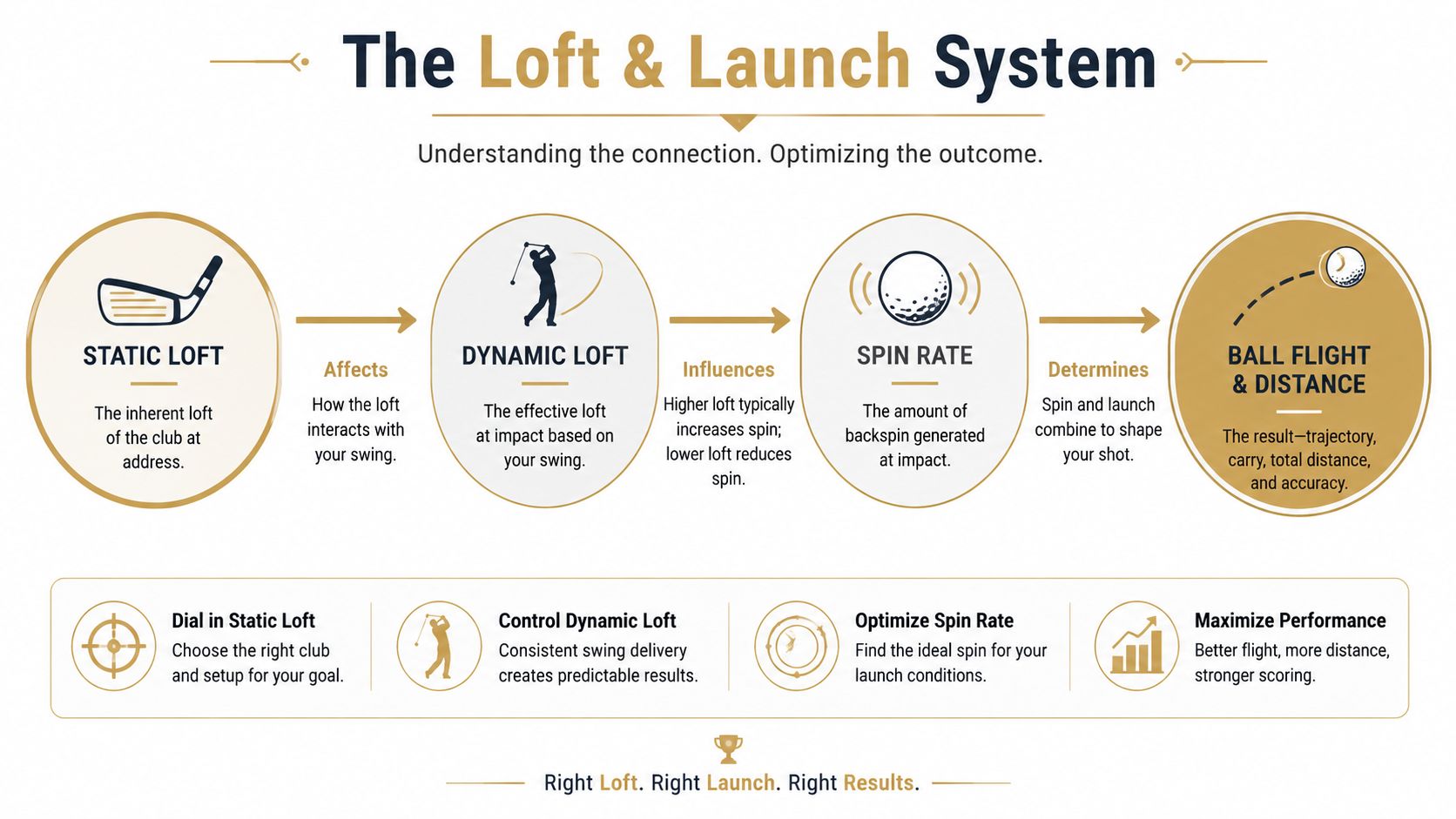
Loft is the starting point, but it's not the whole answer. A hybrid's distance comes from the interaction between static loft, dynamic loft, launch angle, spin, strike quality, and shaft behavior at impact. That's why two clubs with similar loft can produce different carry windows for the same player.
Static loft and dynamic loft do different jobs
Static loft is the number built into the club head. Dynamic loft is what the ball sees at impact after the swing adds or subtracts loft through delivery, angle of attack, and face position. If a player adds too much dynamic loft, the shot can balloon. If the player delivers too little, the ball can come out flat and fall short.
That's the reason a lower-loft hybrid doesn't automatically go farther. If it launches too low and spins too little, the ball may carry less than the higher-loft option that creates a better flight window. A higher-loft hybrid can also be the better choice when the shaft helps the player deliver the head more consistently.
Use carry windows, not ego, to judge the club
A launch monitor session should tell you three things about a hybrid. First, where it carries. Second, how tightly the shots cluster. Third, whether the flight holds a playable descent rather than just chasing raw roll. That's a more useful test than asking which club “goes farther” on one swung ball.
The cleanest decision process is to map the clubs around the carry number you need, not the one you hope to have on your best strike. The chart in the earlier section tells you where a hybrid belongs in the loft sequence. Launch data tells you whether it earns that place in practice.
Carry distance chart tool can help turn those numbers into something you can compare side by side.
A hybrid that carries the right number but lands too shallow is still the wrong club.
Finding and Filling Yardage Gaps with Hybrids
A bag audit usually reveals the problem fast. A player trusts the 5-iron, likes the look of a 7-wood, and has a stretch in the middle where nothing carries the right number with any consistency. That gap matters more than the label on the sole or the loft stamped on the head.
The cleanest audit process
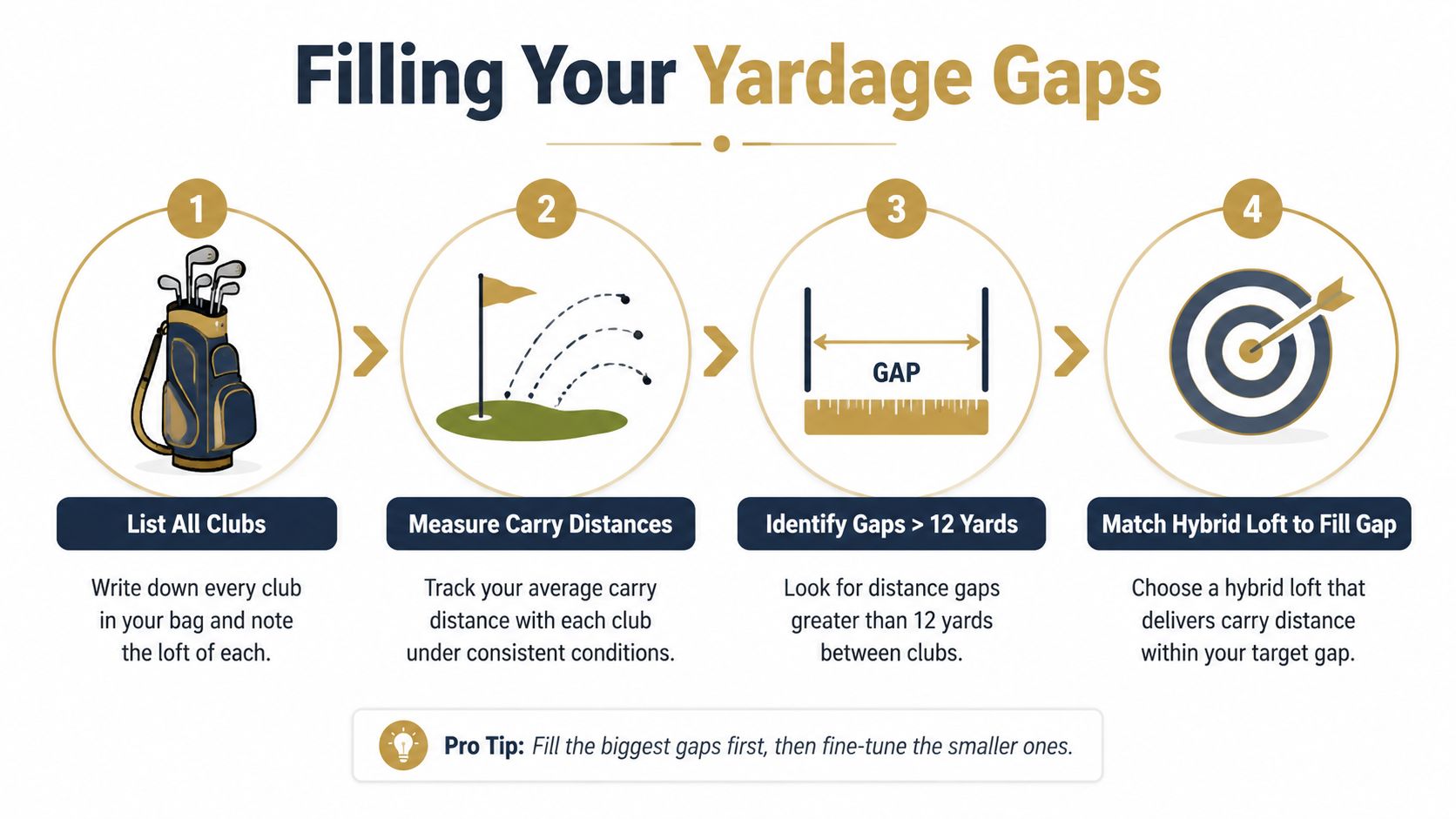
- List every club you play. Leave out the clubs that stay in the trunk or only come out for one perfect range session.
- Use carry, not total distance. Roll can hide poor spacing and make the top of the bag look tighter than it really is.
- Find overlaps and dead spots. If two clubs fly the same distance, one of them is crowding the bag.
- Match hybrid loft to the missing window. Use the loft chart first, then confirm it with launch and carry numbers.
That process is simple, but the honest part is harder. You have to judge the clubs on imperfect strikes, from real turf, with the swing you bring to the course. A hybrid that only fills the gap on a flushed swing is not fixing anything. It just gives you another club that looks good on paper and fails when you need it.
The Golf Bag Gap Analyzer helps line up those carry windows and shows where the spacing starts to blur.
A practical example from the fitter's side
A golfer comes in with a reliable 5-iron, a 7-wood that launches high, and no club in between that can be trusted on demand. The mistake is to add a hybrid by number alone. I would start with the carry gap, then choose the loft that lands between those two clubs without crowding either one.
That is how a hybrid earns its place. It fills a real yardage gap and still gives the player enough launch from the fairway, the rough, or a tight lie when the course asks for a shot that has to carry a set number.
Hybrid Versus Long Iron Versus Fairway Wood
The question isn't just which loft to buy. It's which club type belongs in that part of the bag. A hybrid, a long iron, and a fairway wood can overlap on paper, but they solve different problems in the hands of a golfer.
What each club does well
A hybrid is usually the easiest of the three to launch from imperfect lies. It gives many golfers a friendlier entry into long approach shots, especially when the strike pattern is inconsistent. A long iron offers a more traditional look and can be preferred by players who want a flatter flight and more control of trajectory, but it's less forgiving. A fairway wood generally brings more help getting the ball airborne and can be a strong option from the deck when the player wants height and carry.
That trade-off matters on par 5s and long par 4s. A 3-hybrid and a 5-wood might cover similar yardage, but they won't do it the same way. The fairway wood can create a different launch and descent, while the hybrid often offers better versatility in rough or awkward turf.
How to decide which slot wins
- Choose a hybrid when you want easier launch and more forgiveness from mixed lies.
- Choose a long iron when you prioritize a narrower flight and are confident in solid contact.
- Choose a fairway wood when the shot calls for help getting the ball airborne and carrying trouble.
The fitting question is not “which is better.” It's “which one gives me the shot I need in the slot where the bag is currently weak.” Some golfers carry a 4-hybrid because it gives them confidence off the turf. Others keep a 5-wood because it produces the height they need into long greens. Both choices can be correct if the carry windows are clean.
Good bag building is about matching the club to the shot, not matching the label to the ego.
Using Launch Monitor Data to Validate Your Setup
A loft chart tells you where the club should sit. Launch monitor data tells you what it does with your swing. That's the difference between a guess and a working setup, and it's why the best bag audits happen with shots, not just spec sheets.
What to track in a hybrid session
Focus on the metrics that matter for top-end gapping. Carry distance is the main one, because it tells you whether the club fills the missing window. Launch angle and spin rate show whether the ball flight is stable enough to hold the number. Dispersion tells you whether the club is dependable or just occasionally long.
Once you have those numbers, build a simple carry chart for your own bag. Put the clubs in order, note the carry range you trust, and mark where the next club begins to overlap. If the hybrid sits neatly between your longest iron and shortest wood, you're close. If it duplicates one side and leaves a hole on the other, it needs adjustment.
For golfers who work from launch monitor exports, Golf Ball Fitter can also support the process by helping compare how different balls influence the same club's window.
Why the data matters more than the club name
The same hybrid can produce different results with a different shaft, a different ball, or a swing change. That's normal. What matters is the repeatable window, not the one best swing on the monitor. A practical fitter keeps the final decision tied to the shots that show up often, not the outlier that looks great on screen once.
The strongest setup is the one you can trust in the yardage you face most often. That's the standard worth chasing.
Common Loft Chart Mistakes and How to Avoid Them
The chart is useful, but golfers still misuse it in predictable ways. The biggest error is treating the hybrid number as if it were a universal standard. It isn't. Another common mistake is assuming that loft alone determines distance, when shaft length, head design, and delivery all alter the result.
The mistakes that show up most often
- Assuming the number is standardized: A 4-hybrid from one brand may not match another brand's 4-hybrid.
- Ignoring shaft length: Longer shafts can create more speed but also more variation in strike.
- Overlooking center of gravity: Head design changes launch and spin even when the loft looks similar.
- Failing to re-check after changing a ball or shaft: A new ball or different shaft can move the carry window enough to reopen the gap.
- Forgetting lie and face angle: Directional problems usually won't be fixed by changing loft alone.
The correction is straightforward. Verify the actual loft, hit the club with the ball you plan to play, and confirm the carry window after any equipment change. If a hybrid starts left, starts right, or refuses to gap properly, don't blame loft first. Look at lie, face orientation, and how the club is being delivered.
A chart is only as good as the measurements behind it.
A lot of players get trapped. They buy based on labels, then try to repair the result with swing thoughts. That's backwards. Fit the club to the shot pattern you already produce, then use the chart to keep the rest of the bag from drifting out of line.
Quick Reference Checklist for Your Next Bag Audit
Use this when you are comparing hybrids at home, in the shop, or after a launch monitor session. It keeps the process tied to actual carry windows instead of guessing from the number stamped on the sole.
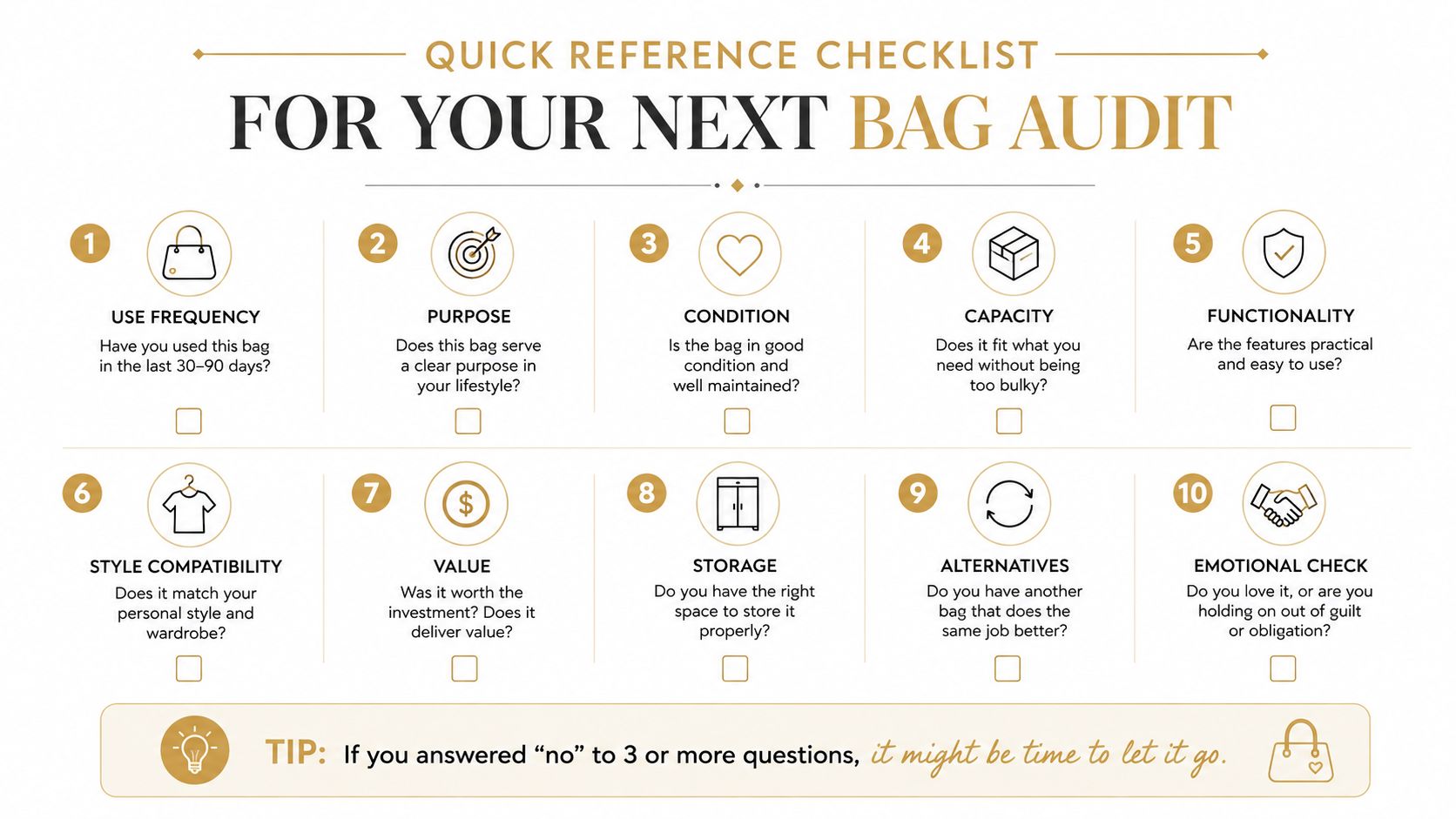
- Verify the actual lofts: Check the manufacturer specs and, if possible, measure the clubs. Two heads marked the same loft can still sit in different places once they are built.
- List your current carry distances: Use the shots you trust, not your best strike. A clean on-range number matters more than one perfect swing.
- Identify the longest iron you can play confidently: That sets the lower boundary of the hybrid slot.
- Identify the shortest wood you trust off the turf: That sets the upper boundary and keeps the top end from bunching up.
- Find the overlap: If two clubs carry the same distance, one is crowding the bag.
- Find the gap: If there is a dead zone, choose the hybrid loft that lives there.
- Confirm the ball flight: Make sure the club launches high enough and lands usefully. Loft that launches fine on paper can still come up short if spin and contact are off.
- Re-test after any equipment change: New shaft, ball, or hosel setting means checking the window again.
- Build a simple carry chart: Keep it in your phone or print it for the next fitting.
- Use a gap tool when needed: A reference like Golf Bag Gap Analyzer can speed up the audit when you are comparing several options.
The right hybrid does more than look correct in the rack. It solves a distance problem in your actual bag. When loft, carry, and replacement slot line up, the top end of the set stops feeling crowded and starts working like a system.
Dialed Golf gives you a practical way to organize launch monitor sessions, compare carry windows, and spot overlaps before they cost you shots. If you are rebuilding the top end of your bag, visit Dialed Golf and use the gap-focused tools to turn your hybrid loft chart into a setup that fits your real carry data.
[…] not a replacement for checking the actual sole. A golfer comparing hybrid options can use this hybrid golf club lofts chart to see how those clubs occupy the space between fairway woods and […]
[…] detailed loft-to-replacement reference is available in this hybrid golf club lofts chart. The useful question remains the same: which carry window does the club occupy, and does that […]
[…] descent, and carry results depending on the head design and the golfer's delivery. Use this hybrid golf club lofts chart to place a 3-hybrid within the wider range of hybrid configurations, then confirm the actual gap […]
[…] while scoring clubs can have closely packed lofts and therefore smaller distance differences. A hybrid golf club loft chart can help golfers inspect that upper-bag transition without relying only on club […]
[…] by loft stamp but collapse into the same launch window once real shots are exported and sorted. A hybrid loft chart for common top-end setups helps frame the discussion, but the decision still has to come from measured carry, dispersion, and […]